
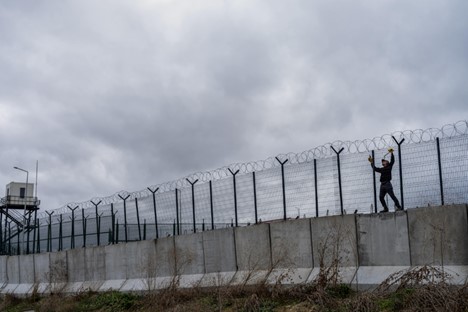
The European Union has directed hundreds of millions of euros into a secretive deportation system just beyond its borders in Turkey, where Syrian and Afghan refugees have been detained, mistreated, and in some cases killed.
Men, women, and children fleeing conflict are being confined in EU-funded removal centres, subjected to abuse and torture, and then forcibly returned to life-threatening situations – all under the EU’s watch.
Over the past ten years, millions escaping the Taliban in Afghanistan and the Syrian civil war have sought refuge in Turkey. While the EU considers it unsafe to send Syrians and Afghans back to their home countries, it relies on Turkey as a buffer to prevent them from reaching Europe, in exchange for billions of euros in aid.
In recent years, with Turkey’s economy in crisis and anti-refugee sentiment rising, Ankara has intensified its deportation efforts. Hundreds of thousands of refugees have been expelled, supported by one of the world’s largest migration detention systems—a vast network of arrests, detention, and forced returns built and funded by the EU.
An investigation by Lighthouse Reports, together with El País, Der Spiegel, Politico, Etilaat Roz, SIRAJ, NRC, L’Espresso, and Le Monde, offers an unprecedented insight into this deportation apparatus and the EU’s role in sustaining it.
Our research identified €213 million in EU funding used to construct and operate around 30 removal centres in Turkey, with nearly €1 billion in total EU aid aimed at controlling migration flows. Part of this funding has expanded fingerprinting systems used to track migrants and equipped detention facilities with barbed wire and reinforced walls.
Documents, interviews, and visual evidence reveal detainees frequently lack legal assistance and are subjected to overcrowded, unsanitary, and abusive conditions, including torture. Many are pressured into signing “voluntary return” documents, falsely implying consent to be deported.
Internal EU reports show staff have repeatedly flagged these abuses, yet senior officials have largely ignored the warnings.
Methods
The investigation involved over 100 sources, including 37 former detainees from 22 EU-funded centres, as well as Turkish, Syrian, and Afghan officials, and ex-centre staff. Their accounts of systemic violence, poor conditions, and coerced “voluntary returns” were corroborated with court records, visual evidence, and hundreds of pages of EU documents.
We conducted the most comprehensive analysis of EU migration funding in Turkey to date, reviewing official reports, research papers, procurement documents, and tender calls. Over 20 freedom of information requests to European Commission agencies were denied, often citing potential damage to EU-Turkey relations.
We also interviewed more than a dozen European diplomats and officials in Brussels and Turkey to understand awareness of the abuses and the weaknesses of EU monitoring mechanisms.
Images captured show EU-funded equipment being used by Turkish authorities for mass arrests and deportations. Internal EU documents trace these items back to their original purpose, exposing a deliberate use in migration enforcement.
Storylines
Abdul Eyse, 28, had lived legally in Turkey for four years before being arrested on the street, detained in an EU-funded centre, and violently forced to sign a “voluntary return” form. He was then transported to Syria on a bus bearing the EU flag.
“I was going to buy household supplies when the Turkish police arrested me,” Abdul recalls. “In prison, we were beaten, tortured, insulted, and held in a refrigerator for up to 12 hours. They forced us to sign deportation papers.”
Abdul had fled Syria in 2019 after a shelling injury and lived in Turkey with his wife and four-year-old son, who has a serious heart condition. Unable to survive without him, his family was sent back to Syria. They now live in Idlib, under control of a group the EU designates as terrorist, with minimal access to medical care. Abdul’s son urgently needs surgery that is unavailable.
Some deportations have proved fatal. Jamshid*, a former Afghan special forces member, fled Kabul after the Taliban takeover and reached Turkey in 2023. He was arrested a month later and deported via Iran to Afghanistan. Weeks afterward, he was shot dead.
Several European diplomats said they raised concerns about the EU-funded abuses and forced deportations to senior officials but were ignored. Seven EU diplomats in Turkey confirmed they were aware of coerced returns and terrible detention conditions, which were systematically omitted from EU annual reports on Turkey. “Everyone knows. People are closing their eyes,” a former EU official said.
“European leaders are fully aware of what is happening but don’t want to get their hands dirty,” said Emma Sinclair of Human Rights Watch. “The EU is indirectly enabling forced returns, subcontracting human rights violations to third countries.”