
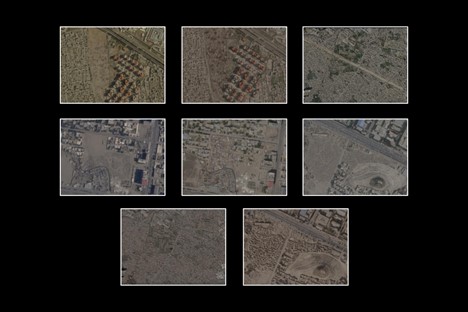
Analysis of satellite imagery shows that between 15 August 2021 and 15 August 2024, the Kabul Municipality cleared more than 1.5 million square metres of land in Afghanistan’s capital, leaving thousands of families without homes.
Officials claim the operations target land grabbing, aim to return displaced communities to their homes, and are part of wider infrastructure development plans.
Yet interviews with residents, humanitarian organisations, and urban planning experts reveal a much grimmer reality: homes being bulldozed while children are still inside, and vulnerable communities bearing the brunt of the city’s “development.”
Research by the Centre for Information Resilience’s Afghan Witness project found that roughly a third of the demolished areas were informal settlements. These neighbourhoods, often housing internally displaced persons (IDPs) and Afghans returning from abroad, represent some of the poorest communities in the country.
Beyond these settlements, demolitions disproportionately affected districts largely populated by ethnic minorities. Police District 13, a Hazara-majority area, suffered the highest loss of residential space compared to other Kabul districts since 2021. Residents report that fear has silenced protests against the destruction.
“Most of these plans were part of previous government initiatives, but they couldn’t force people out,” explained Fakhrullah Sarwari, an urban planning researcher who worked with the former Afghan administration. “Now, the Taliban doesn’t care about that.”
Methods
The Afghan Witness team analysed videos of demolitions and development projects across Kabul, many uploaded by the municipality itself. Using geolocation and satellite imagery, they verified the destruction and mapped the sites, revealing patterns of impact on different communities.
Local reporters from Etilaat Roz and Zan Times visited these areas, gathering testimonies from a dozen residents who described the trauma of the demolitions and the chaos that followed.
Urban planners, humanitarian organisations, and former government staff provided additional context, helping confirm trends identified in the satellite and video analysis.
Storylines
Ahmadullah*, a resident of an informal settlement in PD 4, recounted waking to the sound of bulldozers one morning in August 2024.
“I woke up with children crying around me… My nephew ran by, screaming that his mother and brother were inside as the bulldozer destroyed our home,” he said.
Another resident, whose neighbourhood saw the deaths of two children in July 2023 as reported by the NRC, described similar chaos.
“Women, children, and elderly men begged them to stop until we could find shelter, but they wouldn’t listen… They had pipes and sticks and wouldn’t let anyone speak,” the resident told reporters.
Although the Taliban have claimed that residents of informal settlements can return to their original homes, those interviewed remain trapped in precarious conditions in Kabul.
Ahmad**, whose house sheltered nearly 50 family members, now lives in an abandoned factory. He says a Taliban official promised them new housing, but nothing has materialised.
“We don’t even have tents. We’ve made shelters from plastic pieces… Some days we don’t have anything to eat. We sleep hungry,” he said.