
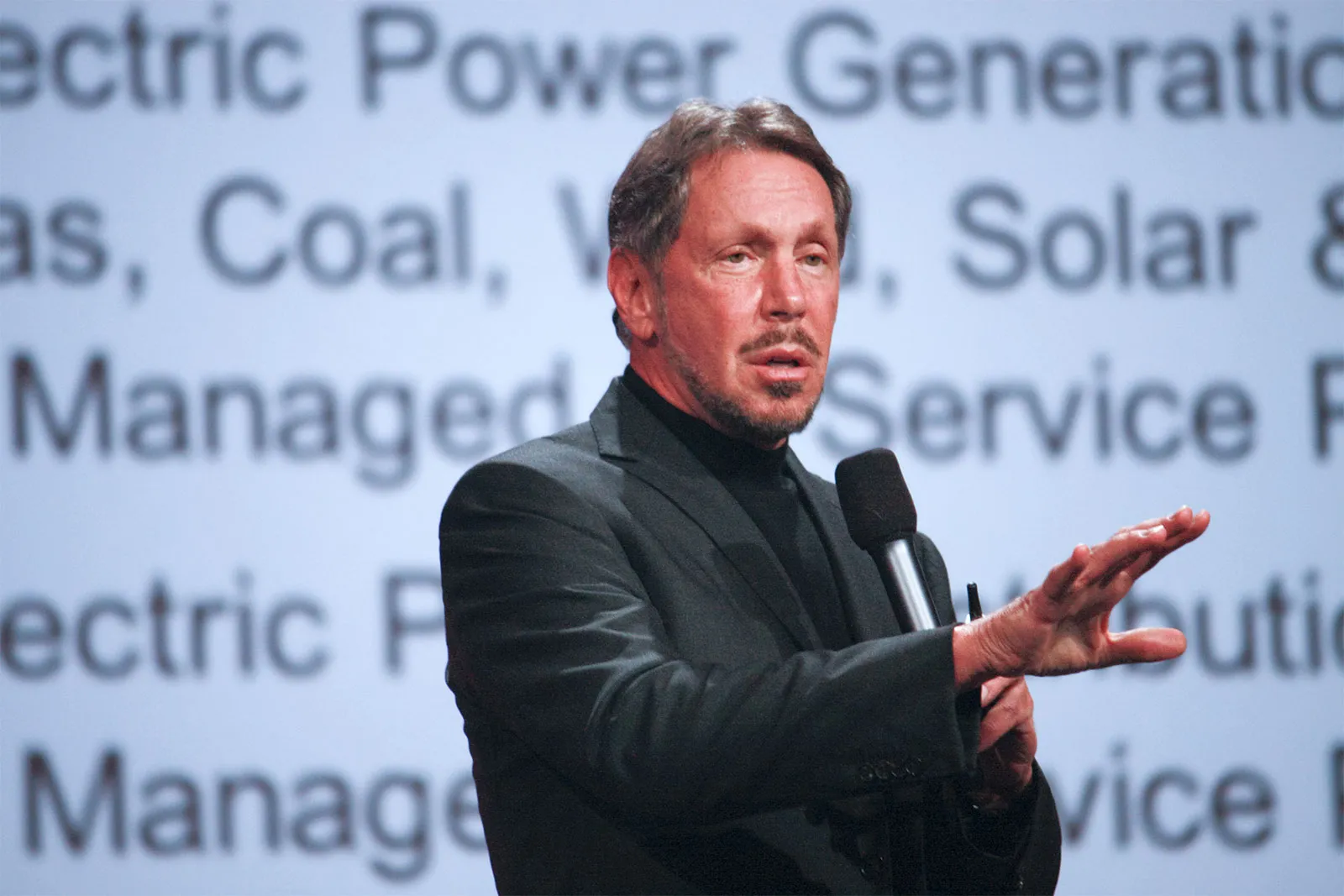
Insiders Expose How Larry Ellison’s Funding Turned Blair’s Institute into a Global Tech Sales and Lobbying Machine for Oracle
Since leaving office, Tony Blair has launched a dizzying array of ventures, from charitable foundations to paid consultancies, making it difficult to identify the centerpiece. That role falls to the Tony Blair Institute for Global Change (TBI), which dwarfs his other endeavors and towers over UK-based think tanks.
Much reporting has centered on Blair himself—his constant newsworthiness, trips to Davos, and meetings with the global elite. But the TBI is far more than a UK-focused operation. It now operates in at least 45 countries, employing former heads of state, ministers, and senior civil servants, with top staff earning over a million dollars annually.
Where previous Blair initiatives ranged from development and peacebuilding to enhancing the reputations of petro-states, the TBI has a singular focus: technology.
The former prime minister now champions artificial intelligence and its potential to transform governments. His institute has even attempted to build proprietary AI tools for sale to Gulf states, promoting the vision of Larry Ellison, the founder of Oracle, as a tech authority.
While the institute leverages Blair’s political brand, much of its funding comes from Ellison, whose 2025 was extraordinary. In September, he briefly became the world’s richest person, as Oracle’s AI infrastructure investments sent its stock soaring. Known in the 1990s as “the man who would be Gates” for his rivalry with Bill Gates, Ellison, 81, has recently been lauded by former US President Donald Trump as the “CEO of everything.” A New York Times profile dubbed him the billionaire “who will soon own the news,” as his family’s media holdings in Paramount-Sky Dance appear poised to expand toward Warner Bros. Discovery.
Ellison donated $130 million to TBI between 2021 and 2023, pledging another $218 million afterward. This infusion grew TBI’s workforce from 200 to nearly 1,000 employees. Blair does not take a salary from the institute, yet it has been able to recruit talent from blue-chip consulting firms like McKinsey and Silicon Valley giants such as Meta. In 2018, the best-paid director earned $400,000; by 2023, the top salary had risen to $1.26 million.
Blair and Ellison’s relationship dates back to Blair’s premiership. In 2003, the two posed for photos at Downing Street to mark Oracle’s donations to 40 specialist schools. In tech circles, this strategy is known as “land and expand.” Since then, Oracle has secured hundreds of UK government contracts, generating £1.1 billion in public sector revenue since early 2022, according to procurement analysts Tussell.
Methods
Ellison’s financial influence over the TBI became evident through the institute’s accounts and US non-profit data, including the Larry Ellison Foundation, which channels donations to both the TBI and the Tony Blair Foundation.
Lighthouse Reports and its UK partner Democracy for Sale spent four months interviewing 29 current and former TBI staff, mostly anonymously, to gain an insider perspective. They spoke with more than a dozen former employees who had advised governments in nine Global South countries, revealing that some work explicitly promoted Oracle’s products, functioned as a “sales engine,” or pushed technology solutions disconnected from local needs. Former staff described a close, almost symbiotic relationship between TBI and Oracle, with joint retreats and shared projects, with one former employee calling them “inseparable.”
This testimony was corroborated by public documents and information obtained via the UK’s Freedom of Information laws, showing an unusually close relationship between the TBI and the British government. Staff regularly met ministers to advance policy recommendations aligning with Oracle’s interests.
Storylines
AI-focused billionaires are drawn to the UK for a clear reason: the National Health Service (NHS) and its unmatched population-level health data. Experts regard Britain’s health records with near reverence; while Europe and the US have comparable datasets—like US veterans’ medical records—none match the NHS in depth, breadth, and historical continuity since 1948. Estimates suggest this data could be worth up to £10 billion annually in areas like drug development and genome sequencing.
When Labour returned to power in July, promising economic growth and an end to the productivity crisis, Blair’s TBI immediately positioned itself as a key influencer. Just five days after Keir Starmer’s election, Blair told TBI’s ‘Future of Britain’ conference that AI was the “game-changer” the country needed. Within months, Starmer echoed Blair’s language, and the TBI became central to shaping the government’s emerging AI strategy, promoting Oracle’s agenda and Ellison’s worldview.
Freedom of Information documents highlight TBI staff occupying influential government roles, including former Blair advisor Peter Kyle, appointed technology secretary with minimal sector experience, advocating a deferential stance toward Big Tech. Meanwhile, TBI policy director Charlotte Refsum engaged with the UK Health Department’s digital chief Felix Greaves and later joined a government working group advising Labour’s ten-year NHS data and technology plan.
During this period, TBI pushed initiatives to unify public data, such as a national data library (NDL), which was still conceptual when Labour included it in its manifesto. Experts disagree on its structure: AI proponents want integrated data for model training, while others stress privacy and local benefits.
Ellison signaled his interest in NHS data during an interview with Blair at the Dubai World Governments Summit in February 2025, calling it “fragmented” yet valuable. Two weeks later, TBI released Governing in the Age of AI: Building Britain’s National Data Library, echoing Ellison’s description.
“There’s a real hard sell here suggesting these gains are inevitable,” said Professor Gina Neff of Queen Mary University London. “TBI isn’t promoting NHS capacity-building—they’re pushing outsourcing to their allies.”
Staff describe a cultural shift during the Ellison funding surge. McKinsey consultants took senior roles, often clashing with employees from humanitarian and development backgrounds. The institute pivoted from policy reports rooted in development expertise to aggressively advocating tech solutions.
By 2023, TBI and Oracle routinely held joint retreats. At One Bartholomew Place in London, teams met in the basement with Oracle executives and key TBI advisors, including board member Awo Ablo. Senior TBI staff also visited Oracle’s Austin, Texas headquarters, coordinated by a TBI employee tasked with “scaling and managing” the partnership. Former staff recalled secretive earlier retreats at Ellison properties.
A former TBI employee noted, “It’s hard to get across how deeply connected the two organisations are. Meetings felt like they were part of the same entity.”
As the partnership deepened, Oracle staff began scheduling meetings directly with TBI employees to monitor international operations and “scope opportunities,” eventually holding regular joint calls.
This created tensions among TBI staff, some of whom felt compelled to push Oracle technologies that were not in the best interest of host countries and could cause harm. Concerns included “vendor lock-in,” where governments might become dependent on Oracle systems initially free but later costly.
In Rwanda, where TBI has operated for over 15 years, officials publicly sought alternatives to Oracle, citing high support and licensing costs. Marvin Akuagwuagwu, a data analyst at TBI’s Africa Advisory unit in 2022–2023, recalled raising concerns about electricity and cybersecurity risks when introducing new technologies to African countries, only to have them dismissed.
“I’m African, I have lived experience, and I was ignored. Negative factors had to be downplayed,” he said.