
As the US and other nations scale back protections for Afghans, new evidence exposes the ongoing scope of reprisal killings, challenging the Taliban’s repeated claims of an amnesty for former Afghan soldiers.
In the first detailed investigation into post-2023 reprisal killings, conducted in partnership with the Military Times, Etilaat Roz, Hasht-e Subh (8am Media), and The Independent, we reveal a sustained pattern of targeted killings, highlighting evidence that the Taliban is systematically hunting former members of Afghanistan’s security forces.
Since 2023, at least 110 former members of the Afghanistan National Defence and Security Forces (ANDSF) have been killed, according to new data. Victims include elite unit personnel who had close operational ties with US and UK Special Forces.
These deaths underscore the fragility of the Taliban’s promised amnesty. Following their 2021 takeover, the group asserted that former soldiers and officials were safe under a general pardon. However, a surge of killings quickly undermined that claim.
Western nations initially sought to evacuate their former Afghan allies, but these pathways have narrowed. Some advocates fear that the Taliban’s reiterated amnesty is being used to justify restrictive immigration policies. Meanwhile, fear in Taliban-controlled Afghanistan has made it increasingly difficult to verify deaths. The UN’s last dedicated report on these killings was issued in 2023.
Our investigation confirms that killings have persisted through 2025, even as the Trump administration ended Temporary Protection Status for Afghans and curtailed other immigration avenues relied upon by Afghan special forces.
In the UK, two resettlement programs for Afghans were abruptly closed in July, leaving those with pending or even approved applications vulnerable. Former Afghan commandos collaborating with British forces reported being tortured while waiting for visas in recent months.
While Taliban officials acknowledge some ANDSF deaths, they attribute them to “personal enmity or revenge,” promising that perpetrators will be punished. Yet interviews with torture survivors point to a more systematic effort to target international allies. Three former elite soldiers recounted being tortured for the contact information of colleagues, with another source noting that this practice had become so widespread that many stopped communicating entirely.
Methods
Lighthouse Reports partnered with Hasht-e Subh (8am Media) and Etilaat Roz to investigate ANDSF killings. Both Afghan outlets had rigorously covered these cases since the fall of Kabul, including 8am’s landmark reporting with the New York Times on early revenge killings.
Our coalition also included the Military Times and The Independent, highlighting cases where rollbacks in immigration protections put Afghan allies in grave danger. We built a database of verified ANDSF deaths, cross-referencing Afghan reporting with the research of PhD scholar Besmillah Taban, former General Director of Afghanistan’s Crime Investigation Department, who maintained a network of former ANDSF contacts.
Many deaths involved personnel who had worked alongside international special forces, emphasizing the human cost of immigration delays. Fear among the special operations community has grown, particularly after reports of torture and killings within the British-backed Triples unit in early 2024, making verification difficult.
Our final count is likely an underrepresentation. Numerous reported deaths were excluded due to our strict requirement for verification by two independent sources. For safety, we avoided contacting sources inside Afghanistan, relying instead on exiled Afghan special forces and American advocates to corroborate information.
Storylines
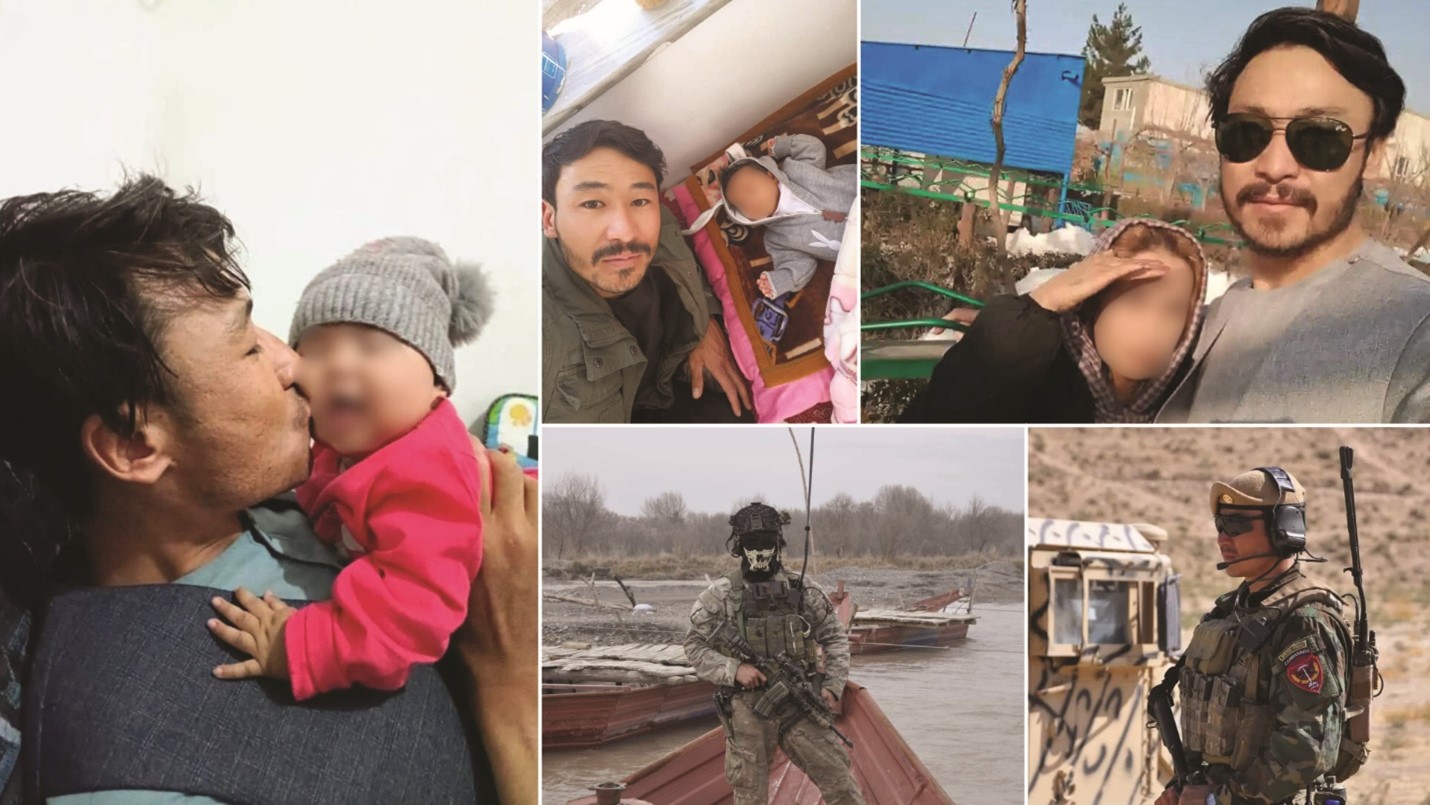
Ali Gul Haideri was among Afghanistan’s most elite soldiers, collaborating closely with US Special Forces. Following the Taliban’s takeover, Ali and his family struggled to leave Afghanistan. Captured and tortured for over a month, he eventually fled with his wife and child, only to be deported back a year later. In early 2024, he was shot dead in Kabul.
In a letter shared with the reporting team, his wife Hawa described the impact on their daughters Hana and Elena:
“Hana remembers her father every day and asks why he doesn’t come back… how painful are the moments when she asks why the Taliban shot my father. Elena was my little girl, but before she could feel the warmth of his hand, she was deprived of him forever.”
Other tragic cases include a former special operations soldier who, living in fear, refused to marry—only to be found dead in 2024, riddled with bullets. Former members of elite units like Ktah Khas (KKA) described brutal torture for access to phone contacts. One colleague they inquired about was subsequently killed, a death we independently verified.
Another soldier shared a letter from a US army captain recognizing his operations as having “sizable strategic significance,” warning that he and his family faced “substantial risk” if identified. Despite this, he remained vulnerable during Afghanistan’s collapse.
Those linked to British forces have suffered similar fates. A former commando from the UK-funded Triples unit, approved for relocation to Britain after years of waiting, was detained and tortured in 2025. His family told The Independent and Lighthouse Reports that the Taliban targeted him for his service: “They didn’t have any mercy… they beat him, and even took out his nails.”